

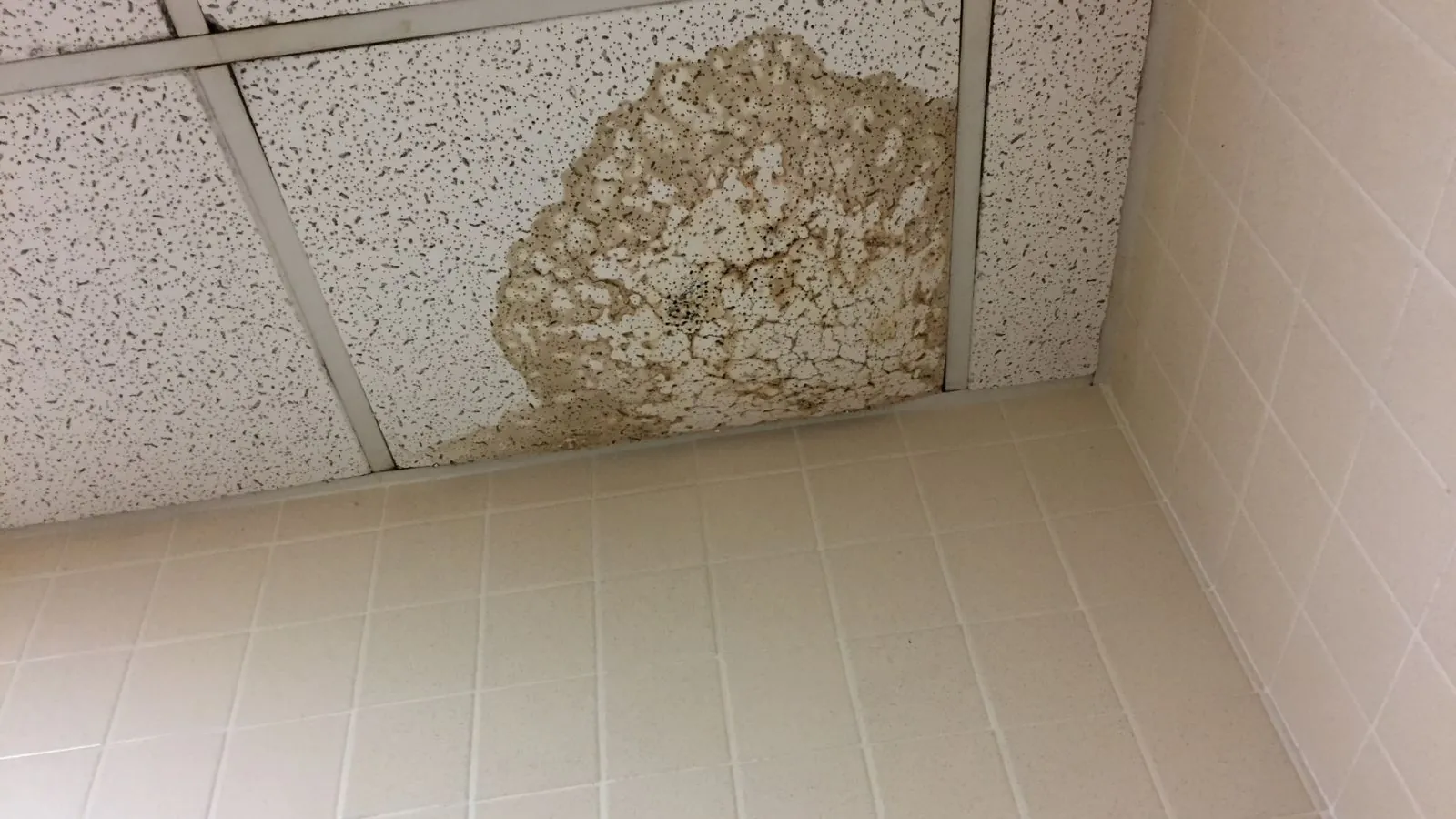
Wall and drywall water damage repair is about what is inside the wall as much as what shows on the surface. Drywall is gypsum wrapped in paper. It wicks water upward, softens and feeds mold if it stays damp. In Grandview, MO, crews measure the wall, dry or remove the wet section, and rebuild it so the repair does not show.
A wall that was painted over without being dried is one of the most common hidden problems found in houses.
Signs a Wall Has Taken Water
- A stain with a brown edge, often shaped like a tide line
- Paint that bubbles, peels or feels cool to the touch
- A soft spot that gives when pressed, or a hole starting to form
- Baseboards that have swollen, split or pulled away from the wall
- A musty smell near one section of wall
Water damage on baseboards is an early clue. Baseboards are usually MDF, which swells quickly, and they sit exactly where water collects at the bottom of a wall.
Where Wall Water Comes From
Inside walls, the usual sources are supply lines, drain connections and shower valves. A bathroom or kitchen on the other side of the wall is the first place to look.
Outside walls bring in rain through siding, window frames and failed caulk. A siding leak can show up as damage on the inside of a kitchen wall. Garage drywall is another frequent report, often from a water heater or a roof leak above the garage.
Water also arrives from above. A leak upstairs runs down inside the wall cavity and appears as a stain near the ceiling line. In that case the ceiling is part of the job, as covered on the ceiling water damage page.
What to Do Before the Wall Is Opened
Safe and useful steps
- If the wall is wet and has outlets or switches, turn that circuit off at a dry panel.
- Do not cut into a wall without knowing where pipes and wires run.
- Pull furniture a foot away so air can reach the surface.
- Photograph the stain with a tape measure in the frame.
Whether drywall is dried or removed is decided under ANSI/IICRC S500, the industry standard, using moisture readings.
Checking Inside the Wall
A pinless moisture meter scans the surface without marking it. A pin meter confirms the reading and can reach the framing behind. A thermal imaging camera shows the outline of the wet area, which is often larger than the stain.
If the cavity holds insulation, that changes the plan. Wet fiberglass does not dry inside a closed wall, so the drywall has to be opened to remove it.
Dry It or Cut It Out?
| Situation | Usual approach |
|---|---|
| Clean water, wet under two days, drywall firm, no insulation | Dry in place with baseboard removed and air directed into the cavity |
| Drywall swollen, crumbling or sagging | Cut out and replace |
| Insulated exterior wall that got wet | Open the wall, remove insulation, dry framing, replace |
| Gray or contaminated water | Cut out above the wet line |
| Visible mold on the surface or behind | Remove under containment |
Sheetrock water damage repair is often smaller than people fear. A flood cut removes a neat band at the bottom of the wall, commonly 12 to 24 inches high, and leaves the rest untouched.
How the Wall Is Dried and Rebuilt
Baseboards are removed and labelled if they can be reused. For drying in place, small holes are drilled behind the baseboard line and dry air is pushed into the cavity. Air movers and a dehumidifier run until the studs and bottom plate match dry readings elsewhere in the house.
For removal, drywall is cut along a straight, level line. After the framing is dry, new board is hung, taped, finished and textured to match. Primer and paint follow, usually corner to corner so the patch blends. The drying stage follows the method on the structural drying page.
Plaster Walls in Older Grandview Homes
The Grandview Residential Historic District contains houses built from about 1905 to 1935. Homes of that period commonly have plaster over wood lath. Plaster resists brief wetting better than drywall and is slow to dry.
The practical point is not to tear out plaster by reflex. It is tested for soundness, dried with patience and patched where it has let go of the lath.
When Mold Is Found Behind the Wall
Opening a wall sometimes reveals growth on the back of the drywall. This is frequent after slow leaks. The wet material is removed under containment through the mold remediation service, and the leak is repaired before the wall is closed.
Wet carpet along the same wall is common too, and the carpet page explains what happens to the pad.
Cost Factors and Insurance
- Linear feet of wall affected and how high the water wicked
- Whether insulation is involved
- Baseboard and trim replacement
- Texture and paint matching
- Days of drying equipment
Sudden leaks are often covered, while long-term seepage and exterior maintenance issues often are not. Check your policy or ask your insurer. The scope and price are explained before the wall is opened. Call (833) 521-1033 for wall repairs in Grandview, Lee's Summit or Pleasant Hill.
Questions About Wall and Drywall Water Damage in Grandview
Prefer to talk it through with a person? Call (833) 521-1033 at any hour.
Is a wet wall an emergency?
If water is actively running inside the wall, close the main valve and call now. If you have found an old stain or a soft spot, book a moisture check soon. The line is open 24/7.
Can I just paint over a water stain?
Only if the wall is confirmed dry and the leak is fixed. Painting over damp drywall hides the stain for a while and traps moisture behind the paint.
There is a soft spot in my wall and a hole is forming. What does that mean?
The gypsum core has broken down from repeated or long wetting. That section needs to be cut out. The crew will check the framing and look for the source before replacing it.
How high up the wall does drywall need to be cut?
A little above the highest wet reading, usually 12 to 24 inches from the floor for a floor-level leak. Clean cuts at a consistent height make the rebuild quicker.
Do you repair the garage drywall too?
Yes. Garage walls and ceilings are dried and repaired the same way. Garage walls shared with the house often have fire-rated board, which is replaced with the same type.
A stained or soft wall is usually wetter inside than it looks. Have it measured.
☎ Call (833) 521-1033