

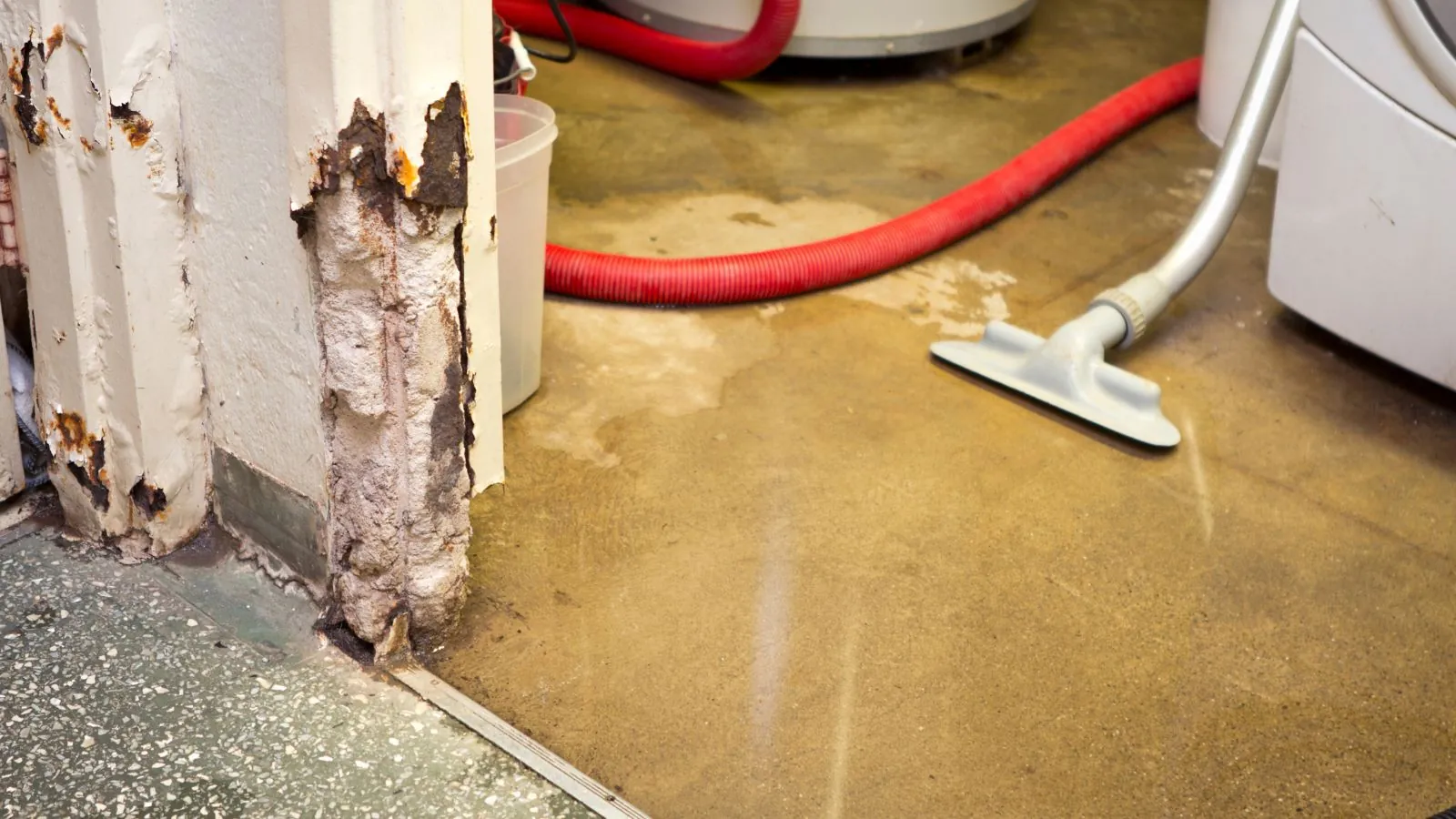
Carpet water damage restoration covers three layers: the carpet, the pad beneath it and the subfloor under both. Wet carpet feels like a surface problem, but the pad is a sponge that can hold many times its weight in water. In Grandview, MO, crews extract the water, decide what happens to the pad, dry the floor system and clean the carpet.
Whether carpet can be kept depends on what kind of water soaked it and how long it has been wet.
Can Wet Carpet Be Kept? It Depends on the Water
| Water source | Category | Carpet | Pad |
|---|---|---|---|
| Supply line, water heater, rain through an open window | 1, clean | Usually kept if dried quickly | Dried in place or replaced |
| Washer drain, dishwasher, aquarium, toilet overflow with no waste | 2, gray | Often kept after cleaning | Replaced |
| Sewage, floodwater from outside | 3, contaminated | Removed | Removed |
| Any source, wet more than two or three days | Degrades over time | Often removed | Removed |
These are the general S500 guidelines. Time moves a loss down the table: clean water that sits becomes gray, and gray becomes contaminated.
What Soaked Carpet Does to the Floor Beneath
On a plywood subfloor, water trapped under pad keeps the wood wet for days and can loosen it. On concrete, moisture rises back into the pad after the surface feels dry. Tack strips rust and release, and the carpet backing can separate from the face fibers.
Water also runs to the edges of the room and wicks into baseboards and drywall. That is why wet carpet jobs nearly always include a check of the walls, following the approach on the wall and drywall page.
What to Do in the First Hour With Wet Carpet
Small steps that protect the carpet
- Stop the source and keep foot traffic off the wet area.
- Lift curtains and furniture skirts, and put foil or plastic under furniture legs to prevent stains.
- Remove rugs with dyes that can bleed.
- Do not use a household vacuum on wet carpet. Only wet-rated equipment is safe.
How Carpet Is Extracted and Dried
Extraction comes first. A weighted extraction tool compresses the carpet and pad while a vacuum unit removes the water. Good extraction does more in an hour than fans do in a day.
For clean water, the carpet may be dried in place with the pad still under it, or the carpet is disengaged at one edge, the wet pad is cut out, and air movers are placed to float the carpet on a cushion of air. A dehumidifier collects the moisture.
Once dry, new pad is installed, the carpet is re-stretched onto the tack strips and seams are repaired. A hot-water cleaning finishes the job. The first stage is described in more detail on the water extraction page.
Scenarios Callers Describe
A closet where the carpet and pad were soaked by a neighbor's sprinkler through the wall. A bedroom next to a utility closet where a tank leaked, a source explained on the water heater leak page. A finished basement where the carpet is wet along one wall after rain.
Each has a different source, but the carpet question is the same: what category is the water, and how long has it been there?
Mold in Carpet After Water Damage
People often lift a corner of old carpet and find staining or growth on the pad or tack strip. That usually points to a past leak or to moisture coming through a slab.
Mold needs moisture, so the first task is finding out whether the area is still wet. If growth is present, the affected carpet and pad are removed and the subfloor is cleaned under the mold remediation service. Questions about health effects should go to a physician.
Basement Carpet
Carpet over a basement slab is the most frequent carpet loss. Concrete releases moisture slowly, so the slab should be tested before new pad goes down. Wider basement issues, such as seepage and sump failures, are on the basement water damage page.
Cost Factors and Insurance
- Water category, which decides whether carpet stays
- Square footage and number of rooms
- Pad replacement and carpet reinstallation
- Furniture that must be moved or blocked up
- Days of drying equipment
Coverage follows the cause. A sudden supply leak is often covered. Seepage, surface water and sewer backup may not be without specific coverage. Check your policy or ask your insurer. The scope and price are explained before the carpet is lifted. Call (833) 521-1033 for carpet jobs in Grandview, Lee's Summit or Pleasant Hill.
Questions About Carpet Water Damage in Grandview
Prefer to talk it through with a person? Call (833) 521-1033 at any hour.
Is wet carpet an emergency?
If water is still entering, yes. Stop the source and call. If the leak has stopped, the carpet should still be extracted in the first day or two for the pad and subfloor to have a chance. The line is open 24/7.
Can I dry soaked carpet with fans and a shop vacuum?
For a small clean-water spill, sometimes. For a soaked room, a shop vacuum cannot pull water out of the pad, and fans without a dehumidifier leave the subfloor damp. Never try this with sewage or floodwater.
Does the pad always have to be replaced?
No. With clean water and fast extraction, pad can sometimes be dried in place. Gray or contaminated water, or pad that stayed wet for days, means replacement. Pad is the inexpensive part of the floor.
I pulled up the carpet and found mold underneath. What now?
Leave it in place and avoid disturbing it further. Have the area checked for current moisture. The affected carpet and pad are then removed under controlled conditions and the subfloor is cleaned and dried.
Will my carpet smell after it dries?
Not if it was extracted and dried promptly and cleaned afterwards. A lingering musty odor usually means the pad or subfloor is still damp.
Wet pad keeps the subfloor soaked. Call for extraction before the damage spreads to the walls.
☎ Call (833) 521-1033