

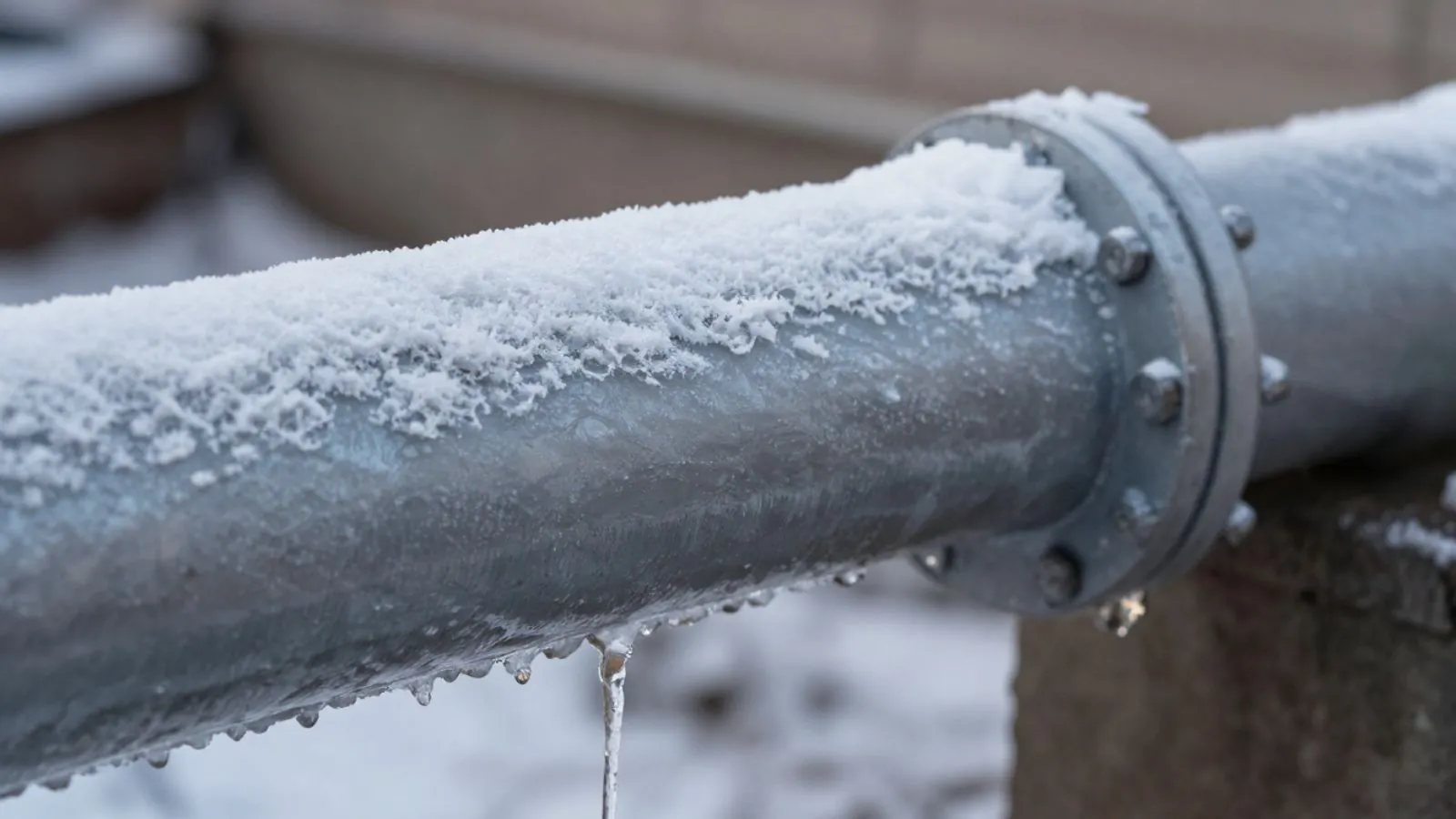
Frozen pipe water damage often shows up hours after the cold has passed, which makes it an emergency that catches people off guard. Ice forms a plug, pressure builds between the plug and a closed faucet, and the pipe splits. When the ice melts, water runs freely. Crews serving Grandview, MO take these calls 24/7.
If a pipe has frozen but not yet leaked, close the main valve now and open the nearest faucet. If water is already running, shut the main, keep away from wet electrical fixtures, and move belongings out from under the wet area while you wait.
Is a Frozen Pipe an Emergency Before It Leaks?
Yes. A faucet that gives a trickle or nothing on a very cold morning is the warning. The split has often already happened, and the ice is the only thing holding the water back.
Warming a pipe with an open flame is dangerous and should never be tried. Gentle room heat with the main valve closed is the safe choice. A licensed plumber can locate and repair the split. The restoration work begins with whatever the thaw releases.
What to Do, and What to Avoid, With Frozen Pipes
Safe handling
- Close the main water valve before the pipe thaws.
- Open the affected faucet so melting water has somewhere to go.
- Warm the room, not the pipe. Never use a torch, heat gun or open flame.
- Keep electrical heaters and cords away from any area that may get wet.
Once water has been released, extraction and drying follow the ANSI/IICRC S500 standard for water damage restoration.
Why Kansas City Area Winters Split Pipes
National Weather Service normals for Kansas City put the mid-January low near 19 degrees and the normal high near 38. Night after night below freezing is ordinary here, and the record January low was 20 below zero in 1912. Water lines in unheated spaces are exposed to that cold every winter.
The practical lesson is about location. Lines in exterior walls, over garages, in crawl spaces and in houses left empty with the heat turned down are the ones that freeze. If you are leaving for a winter trip, keeping the heat on and the main valve closed removes most of the risk.
What Thawed Pipe Water Does to a House
Frozen pipe losses tend to be large because nobody is watching when the thaw comes. A line in an attic or upstairs wall can run for hours, soaking insulation, bringing down ceilings and filling the rooms below.
Cold also slows evaporation. A house with the furnace off stays wet longer, so materials that might have dried in a warm house are more likely to need removal. Sagging ceilings are handled as ceiling water damage, and the same visit usually includes emergency water extraction on the floors below.
How Frozen Pipe Water Damage Is Restored
The crew first makes the building safe: water off, power checked, and any ceiling that is holding water drained in a controlled way. Heat is restored where possible because warm, dry air is what makes drying equipment effective.
Next comes extraction, then a moisture survey of every wall and ceiling near the pipe run using meters and thermal imaging. Wet insulation is removed because it holds water against the framing. Air movers and dehumidifiers are set, and readings are logged each day until the structure matches a dry reference.
Where the split was in a crawl space, the under-floor area needs its own attention, described on the crawl space water damage page. Supply breaks in warmer months follow the steps on the burst pipe page.
Cost Factors and the Insurance Question
- How long water ran after the thaw
- Whether ceilings collapsed and insulation must be replaced
- Number of levels affected
- Extra drying days in a cold or unheated house
- Rebuild of drywall, flooring and trim
Many policies treat a sudden freeze break as a covered loss, but insurers often ask whether heat was maintained in the home. Check your policy or ask your insurer, and keep your utility bills and photos. Expect the scope and the cost to be laid out before drying equipment arrives. Call (833) 521-1033 to arrange an assessment.
Vacant and Rental Homes in Grandview
Empty houses carry the highest freeze risk because a leak can run unnoticed. The city of Grandview registers rental and non-owner-occupied homes, and owners of those properties should have someone walk the house during cold snaps.
Crews respond across Grandview and to neighboring Lee's Summit and Pleasant Hill. If you manage a property from out of town, the dispatcher can coordinate access with your local contact.
Questions About Frozen Pipe Water Damage in Grandview
Prefer to talk it through with a person? Call (833) 521-1033 at any hour.
Do you handle frozen pipe water damage emergencies at night or on weekends in Grandview?
Yes. Thaws often happen overnight or while people are away, so the line is staffed 24/7. Close the main valve and tell the dispatcher whether the heat is working, since that affects the drying plan.
My pipes are frozen but nothing is leaking. Should I call now?
Call a plumber first to locate and repair any split before the thaw. Keep the main valve closed. If water appears when the ice melts, call the restoration line right away.
The leak happened in a vacant house and ran for days. What should I expect?
Expect significant removal of drywall, insulation and flooring, and a longer drying period. Photograph every room before anything is moved and notify your insurer early, since major losses at unoccupied homes get close attention.
Does insurance cover frozen pipe damage?
Often, when the break is sudden and reasonable steps were taken to keep the house heated. Policies differ and vacancy clauses matter. Check your policy or ask your insurer.
How long does drying take in winter?
Usually a little longer than in summer if the house was cold, often four to six days. Restoring heat early shortens it. Drying ends when moisture readings match a dry area of the same house.
A thawing pipe can flood a house in an afternoon. Close the main valve and call.
☎ Call (833) 521-1033