

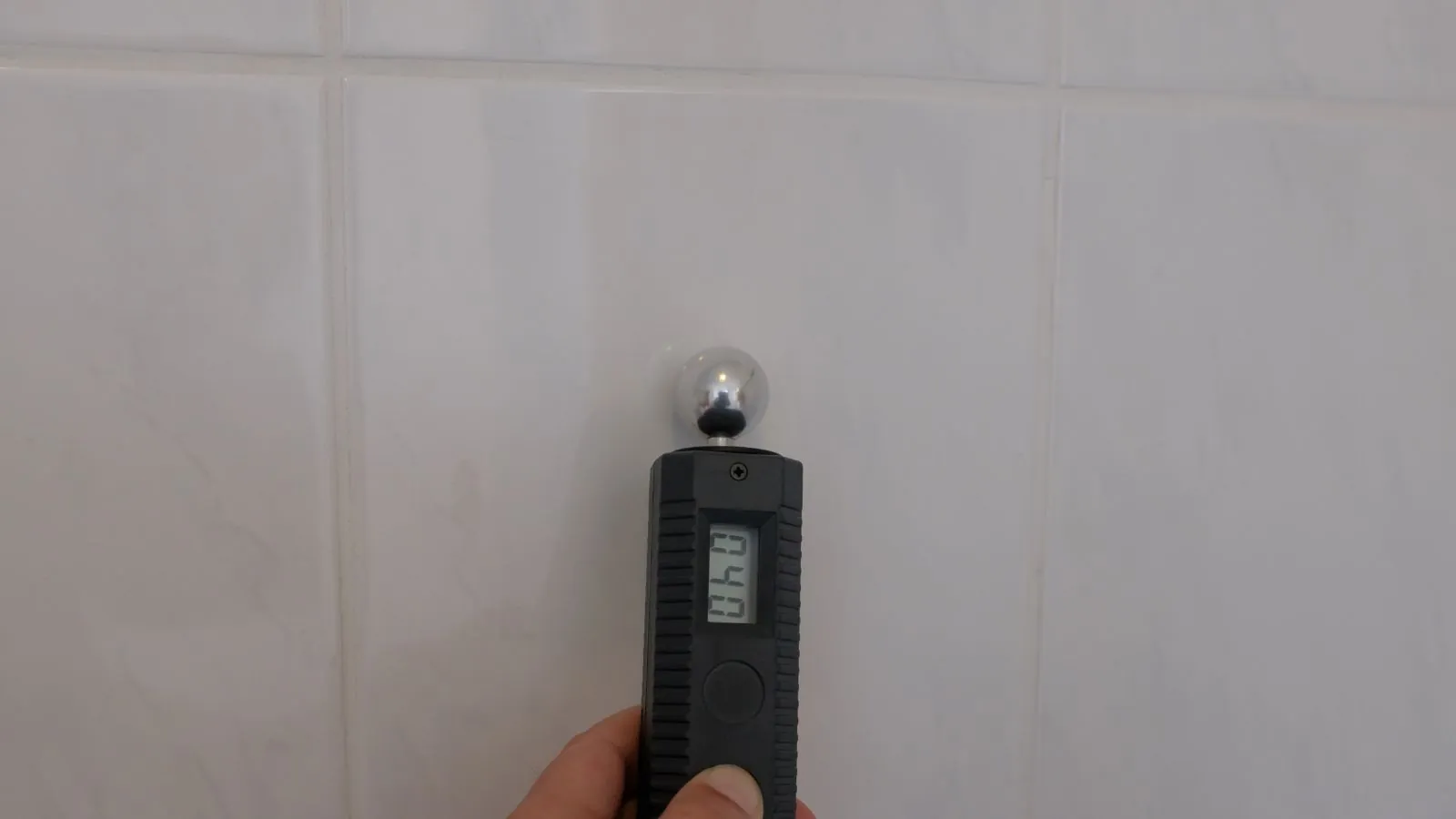
Structural drying is the controlled removal of moisture from the building itself: framing, subfloor, drywall, plaster and concrete. It starts after the standing water is gone and ends when instruments show the materials are as dry as an unaffected part of the same house. In Grandview, MO, crews carry out drying to the ANSI/IICRC S500 standard.
The equipment looks simple. The skill is in placing it, measuring every day and knowing when to stop.
The House Looks Dry but Smells Damp. Now What?
This is the situation most people are in when they find this page. The puddle was mopped up days ago, yet a wall feels cool, the baseboard has swollen or a musty smell hangs in the room. Surfaces dry quickly. The inside of a wall does not.
The trade names for the fix are structural drying, dehumidification and water mitigation. They all describe the same goal, which is getting hidden moisture out before it causes rot, odor or mold.
Moisture Mapping: Finding Water You Cannot See
Drying begins with measurement. A pin or pinless moisture meter reads the water content of wood and drywall. A thermal imaging camera shows cooler, evaporating areas behind paint. A hygrometer records air temperature and humidity.
Together these produce a moisture map of the affected rooms. The same points are measured again each day, so progress is a matter of record. Ask to see the log. It is the plain evidence that the job is working.
What Each Piece of Drying Equipment Does
| Equipment | What it does | Where it is used |
|---|---|---|
| Air mover | Pushes fast, dry air across wet surfaces to speed evaporation | Along walls and floors, roughly one per 10 to 16 feet of wall |
| LGR dehumidifier | Pulls evaporated moisture out of the air and drains it away | Centered in the drying area with doors closed |
| Desiccant dehumidifier | Dries air chemically, works in cool conditions | Cold basements, winter losses, dense materials |
| Floor drying mats | Draw moisture up through wood flooring under suction | Cupped hardwood |
| Wall cavity system | Injects dry air through small holes behind the baseboard | Wet walls kept in place |
| HEPA air scrubber | Filters dust and spores from the air | Contaminated or dusty jobs |
Air movers alone only move the problem into the air. Without a dehumidifier, the moisture settles into other materials, which is why household fans often make a room feel dry while the walls stay wet.
How Long Drying Takes
Most clean-water losses in framed houses dry in three to five days of continuous running. Plaster, hardwood, thick beams and concrete take longer. A cold house or a humid week slows everything.
Equipment is noisy and warm, and it must run day and night. Turning it off overnight can add days. The crew returns daily to take readings, move equipment toward remaining wet spots and remove units that are no longer needed.
What to Do, and Not Do, While Equipment Is Running
Living with drying equipment
- Keep doors and windows in the drying area closed unless the crew says otherwise.
- Do not switch units off at night. Continuous running is what dries the structure.
- Do not move air movers. Their angle is set on purpose.
- Keep children and pets away from cords and fans, and tell the crew if a breaker trips.
Water Mitigation: Stopping Damage Before Repair
Water mitigation is the umbrella term for everything done to stop a water loss from getting worse: extraction, removal of materials that cannot be dried, and structural drying. It ends when the building is dry and stable. Restoration, meaning the rebuild, follows.
If liquid water is still present, the first stage is emergency water extraction. Materials that often come out during mitigation include soaked pad, covered on the carpet page, and swollen drywall, covered under wall and drywall repair.
Dry in Place or Remove and Replace?
Drying in place keeps demolition and rebuild costs down and suits clean water caught early. Removal is right when materials are contaminated, have lost strength or would take longer to dry than they are worth.
A fair crew explains that choice room by room. For example, wood floors may justify a week on drying mats because replacement is costly, a judgment discussed on the hardwood floor page.
Cost Factors and Insurance
- Number of rooms and the class of the loss, meaning how much material is wet
- Count of air movers and dehumidifiers needed
- Days of running time and monitoring visits
- Specialty drying for hardwood, plaster or concrete
- Any removal and later rebuild
When the cause is a covered loss, insurers generally expect drying to be documented with daily readings. Check your policy or ask your insurer. Scope and price are explained before equipment goes in. Call (833) 521-1033 for an assessment in Grandview, Lee's Summit or Pleasant Hill.
Questions About Structural Drying in Grandview
Prefer to talk it through with a person? Call (833) 521-1033 at any hour.
How do I know when my house is actually dry?
By comparison. Wet materials are measured daily against the same material in a dry part of your house. When the readings match, the structure is dry. A set number of days is only an estimate.
Can I rent the air movers and dehumidifiers from you?
No. Equipment is used on jobs the crew is monitoring and is not rented out. Drying without daily measurement is the main reason do-it-yourself jobs leave wet framing behind.
Do I have to leave the house during drying?
Usually not for clean-water losses. Expect noise, warmth and closed doors in the affected rooms. For sewage or mold work, the crew may ask you to stay out of contained areas.
Will running the equipment make my electric bill jump?
It will raise it for those days. Each unit draws a few amps, and several run together. The crew spreads them across circuits so breakers do not trip.
Is structural drying an emergency service?
Drying is planned work, but it is time-sensitive. Missouri health officials advise drying wet materials in the first 24 to 48 hours to limit mold. The phone line is open 24/7 if you need to start quickly.
Damp walls and musty rooms need measurement, not guesswork. Ask for a moisture check.
☎ Call (833) 521-1033