

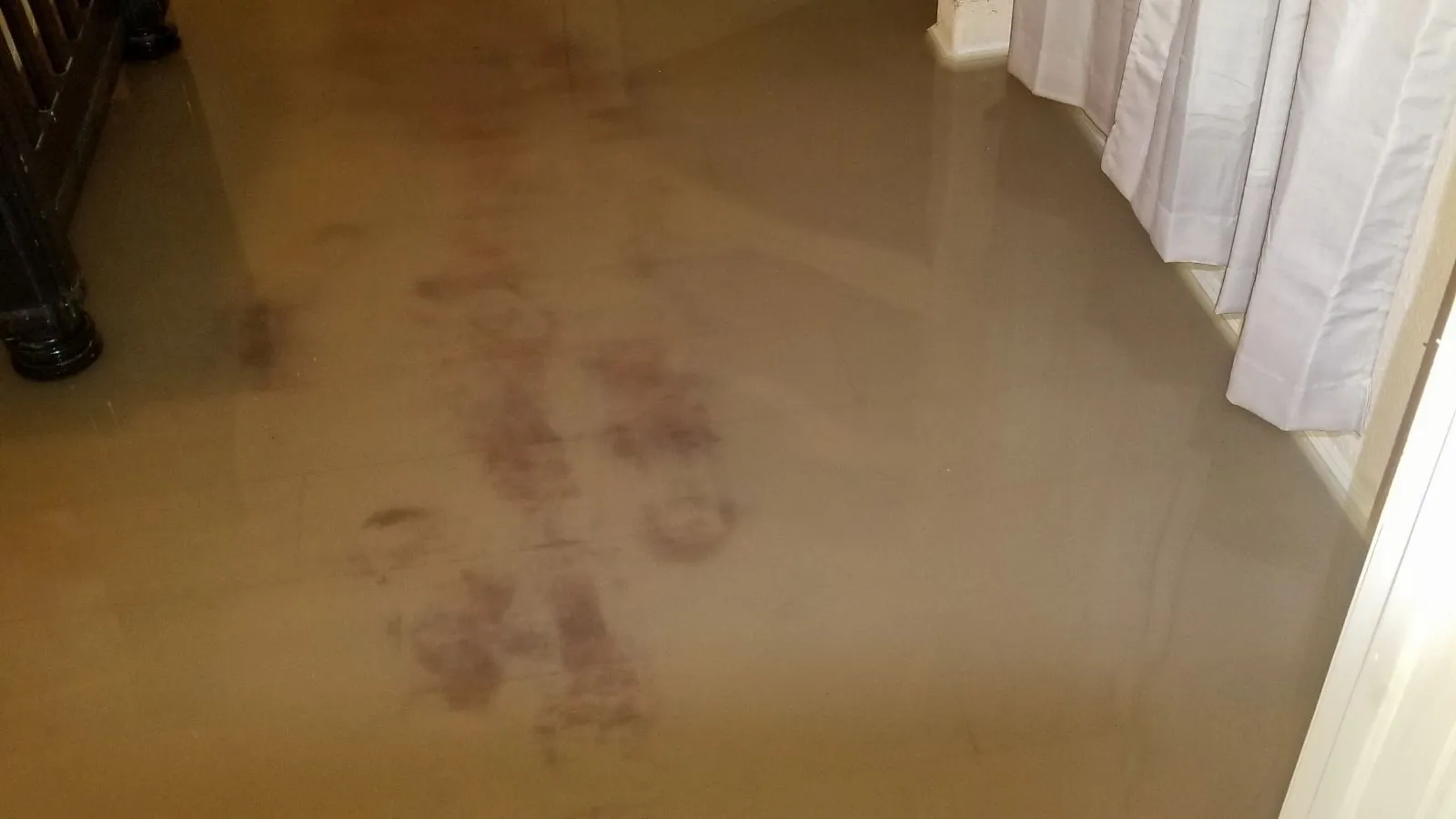
A flooding basement is an emergency because it is the low point of the house, where water collects around the furnace, water heater and electrical equipment. Basement water damage cleanup covers pumping, drying and repair of the below-grade room and what is stored in it. Crews for Grandview, MO take calls 24/7.
Do not step into standing water if outlets, cords or appliances are submerged. Turn off power to the basement only if the panel is upstairs or you can reach it on a dry path. If the water is from a pipe, close the main valve. Then move what you can to a higher shelf or floor.
Basement Flooding Emergencies: Safety Comes First
Electricity and water in the same room is the main danger. If the panel itself is in the wet basement, stay out and call the electric utility or an electrician. If you smell gas near the furnace or water heater, leave the house and call the gas utility or 911.
When it is safe, find out where the water is coming from. A pipe leak has a steady flow. Rain seepage follows the weather. A floor drain that brings up dark water is a sewer problem and needs the precautions on the sewage backup page.
Why Basements Take Water
- Sump pump failure. The pump jams, loses power in a storm or cannot keep up.
- Seepage after rain. Water comes through wall cracks, the floor joint or window wells.
- Plumbing and appliances. Water heaters, washers and supply lines are often in the basement.
- Rising water outside. Creek and surface flooding enter through doors and windows.
Callers describe water coming into the basement after every hard rain, a basement that is flooded and musty, and a pump that stopped during a storm. Rising floodwater from outside is handled as contaminated, as explained on the flood damage cleanup page.
Finished Versus Unfinished Basements
An unfinished basement with bare concrete walls is the simpler job. Water is pumped out, the slab and walls are cleaned and dried, and wet contents are sorted.
A finished basement adds carpet, pad, drywall, insulation, wood framing and sometimes a bathroom or kitchenette. Water runs under the bottom plates of the stud walls, so the far side of a wall can be wet even when the room looks fine.
| Finish | Clean water, caught early | Seepage or contaminated water |
|---|---|---|
| Carpet | Often kept, pad may be replaced | Removed |
| Drywall | Dried or cut 12 to 24 inches up | Cut above the water line |
| Wall insulation | Removed where wet | Removed |
| Paneling | Removed to dry the cavity | Removed |
| Framing | Dried in place | Cleaned, treated and dried |
Before You Go Downstairs: A Safety Checklist
Check each point from the stairs
- Is water touching outlets, cords, the furnace or the water heater? If yes, stay out.
- Can you smell gas or sewage? Leave and call the utility or 911 for gas.
- Is the water still rising? Note the level against a stair tread.
- Is the panel reachable on a dry path? If not, leave the power to an electrician or the utility.
Cleanup and drying then follow the ANSI/IICRC S500 standard, which sets out how contaminated and clean water losses are handled differently.
How Basement Cleanup Works
Deep water is pumped out with submersible pumps, and the last layer is removed with extraction units. The crew then measures the slab, the wall framing and the drywall with moisture meters.
Wet materials that cannot be dried are cut out along a level line. Air movers and dehumidifiers follow. In cool basements a desiccant dehumidifier may be used because it works well at low temperatures. Readings are logged daily.
The pumping stage is described on the water extraction page. Basement carpet has its own section on the carpet water damage page.
Basements Near the Little Blue River
In July 2017 the Little Blue River flooded homes around Merrywood Circle in Grandview, and some were hit again weeks later. After those floods the city had a 3D model of its terrain built to show residents how stormwater moves. If you live near the river or a tributary, keep stored items in plastic bins on shelving and check the FEMA flood map for your address.
Lower-level flooding of that kind is groundwater and surface water, which insurers treat differently from a broken pipe.
Restoration Is Not Waterproofing
Crews remove the water, dry the basement and repair the damage. They do not seal foundation walls, install drain tile, replace sump pumps or inspect foundations. If water returns with each storm, a waterproofing or foundation contractor needs to address the cause.
A dry, documented basement gives that contractor a clean start, and the moisture readings help show where water is getting in.
Cost Factors and Insurance
- Depth of water and whether it is clean or contaminated
- Finished area and the materials in it
- Contents to move, clean or discard
- Days of drying equipment
- Rebuild of walls and flooring
A burst pipe is often covered. Groundwater seepage and flooding are usually excluded, and sump or sewer backup often needs an added endorsement. Check your policy or ask your insurer. The scope and price are explained before pumping and removal start. Call (833) 521-1033 for basements in Grandview, Lee's Summit and Pleasant Hill.
Questions About Basement Water Damage in Grandview
Prefer to talk it through with a person? Call (833) 521-1033 at any hour.
Do you handle basement water damage emergencies at night or on weekends in Grandview?
Yes. Sump pumps fail during storms, often at night, and the line is answered 24/7. Stay out of the water if anything electrical is submerged and tell the dispatcher how deep it is.
My basement is flooded and already smells musty. Is it too late?
No, but expect more removal. A musty smell means materials have been wet for a while. The crew will pump, remove what cannot be dried, dry the structure and check for mold.
Do you replace sump pumps or waterproof basements?
No. Restoration is not waterproofing. A plumber or waterproofing contractor handles pumps, drains and sealing. Crews do the cleanup, drying and repair.
Water comes in after rain through the wall. Can you find the cracks?
Moisture readings and thermal imaging show where the wall is wet, which helps narrow down the entry point. Diagnosing and repairing the foundation itself belongs to a foundation specialist.
Is basement flooding covered by homeowners insurance?
It depends on the cause. Sudden pipe breaks are often covered. Seepage and outside flooding usually are not without separate coverage. Check your policy or ask your insurer.
Water in the basement reaches the furnace and wiring fast. Call the 24/7 line.
☎ Call (833) 521-1033