

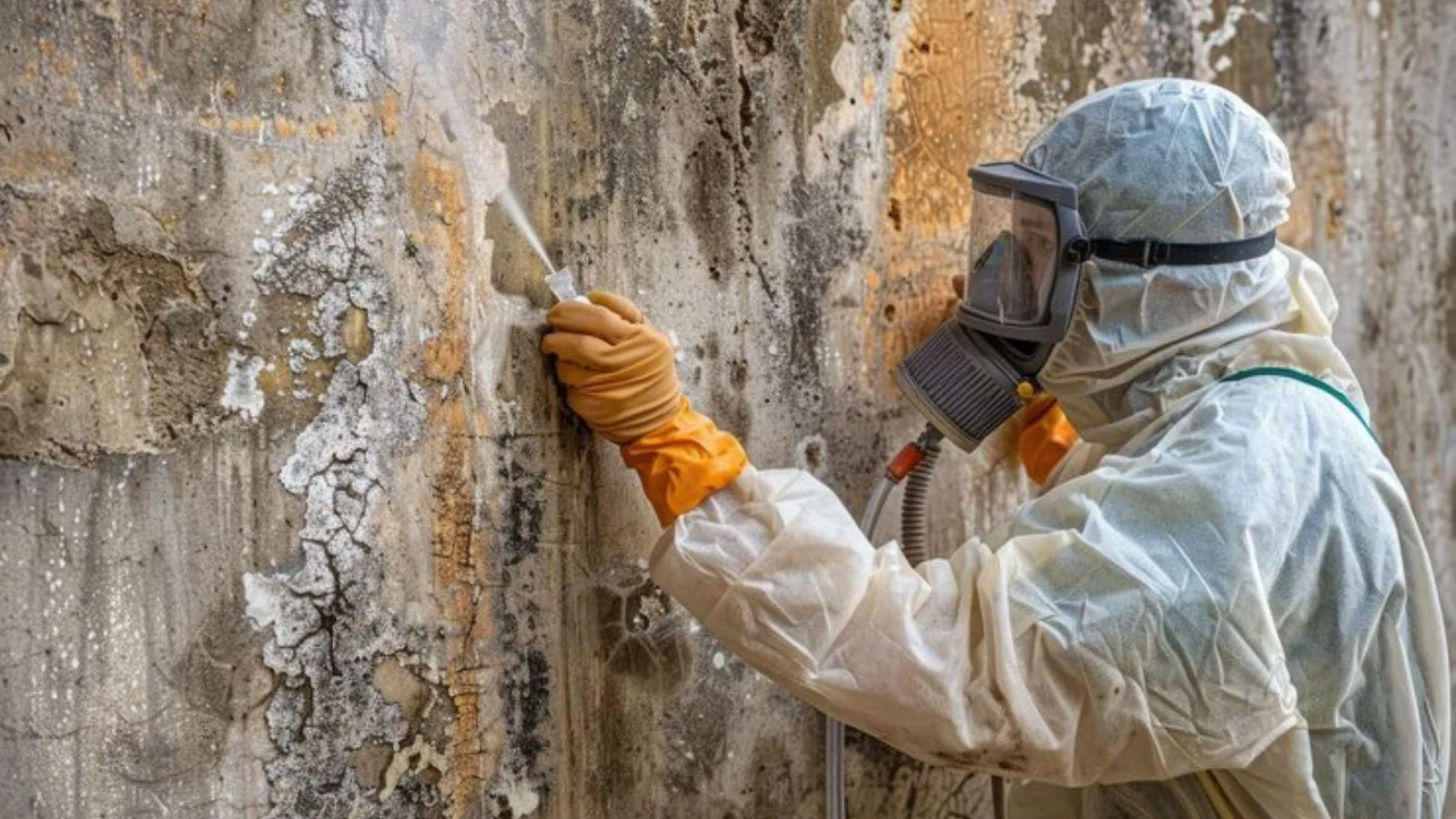
A patch of mold on a basement wall raises one question before any other: what is the wall made of? Hard masonry can be cleaned in place. Paper-faced drywall and wood paneling usually have to come off. Using the wrong method wastes a weekend and leaves the problem behind the surface.
This guide is specific to walls. It explains how to identify the surface, clean or remove it safely and avoid the common mistakes.
First, Is It Mold?
Not every mark on a basement wall is mold. Efflorescence is a white, powdery or crystalline deposit left when water moves through masonry and evaporates. It brushes off dry and dissolves in water. Mold is usually darker, can be fuzzy or slimy and smears when wiped.
Efflorescence is not a health concern, but it is a sign that water is coming through the wall. Either way, the wall is telling you about moisture.
Match the Method to the Wall
| Wall surface | Can it be cleaned? | Method |
|---|---|---|
| Bare poured concrete | Yes | Scrub with detergent and water, rinse, dry |
| Bare concrete block | Yes, with effort | Stiff brush, detergent, rinse, long drying time |
| Painted masonry | Usually | Clean gently, scrape loose paint, repaint only when dry |
| Stone foundation | Yes | Brush and detergent, avoid soaking old mortar |
| Drywall | Rarely | Cut out and replace the affected section |
| Wood paneling | Sometimes | Remove to inspect behind, clean or replace |
| Insulation behind a finished wall | No | Remove and replace |
Safety Gear and Setup
- N95 respirator, snug-fitting goggles and long rubber gloves
- Old clothes that can be washed hot afterwards
- Plastic sheeting to close the doorway to the rest of the house
- A window fan blowing out, if the room has a window
- Heavy bags for debris
Turn off the furnace or air conditioner while you work so the system does not pull dust and spores into the ducts. Keep children, pets and anyone with breathing problems out of the area.
Cleaning Concrete, Block and Stone
Mist the area lightly with water first so dry spores are not brushed into the air. Scrub with a stiff brush and a bucket of water with household detergent. Work from the edge of the patch toward the middle.
Rinse with clean water and wipe down. Then dry the wall with a fan and a dehumidifier until it is fully dry. Bag the rags and brush heads. Staining may remain in the pores of the masonry even after the growth is gone.
Do not paint over mold, and do not apply waterproof paint to a damp wall. Paint traps moisture and will blister.
Removing Moldy Drywall or Paneling
Growth on the face of drywall usually means growth on the back as well. Cut out the affected section at least a foot beyond the visible edge, bag the pieces in the room and remove any damp insulation behind.
Let the framing and the masonry behind it dry completely before rebuilding. If the framing has surface growth, it can be scrubbed, dried and sanded lightly. Larger jobs follow the method on the wall and drywall repair page.
If you open a wall and find far more than you expected, stop. Close the plastic, leave the room and get a professional assessment.
Why It Grew There
Cleaning deals with the result. The cause is one of three things: water coming through the wall, a plumbing leak nearby, or humid air condensing on a cold surface. Gutters, downspouts and soil that slopes toward the house are the first things to check outside.
Furniture or boxes pushed against an outside wall create a pocket of still, damp air. Simply moving storage a few inches off the wall prevents many repeat cases.
When to Call for Help With a Wall
Call for help when the patch is larger than about 10 square feet, when it is inside a finished wall system, when it follows sewage or floodwater, or when it comes back. Professional mold remediation, done to the ANSI/IICRC S520 standard, sets up containment, runs HEPA filtration and removes material without spreading it.
Questions about health effects should go to your physician.
Local Note for Grandview, MO
Old foundations and state guidance
Grandview has houses from several eras. The National Register listing for the Grandview Residential Historic District describes homes from about 1905 to 1935, some with exposed rough-cut stone foundations. Stone walls laid with old mortar should be brushed and cleaned gently. Pressure washing or soaking them can damage the joints.
The Missouri Department of Health and Senior Services advises that testing is generally unnecessary when mold is visible, and that mold will always be found to some degree in any test. For a visible patch on a wall, the money is better spent on removal and on fixing the dampness. Source types: National Register documentation and the state health department website.
Service Area
Help is available across Grandview. Homeowners in Lee's Summit and Pleasant Hill can call the same line and ask about availability.
Basement Wall Mold FAQs
Prefer to talk it through with a person? Call (833) 521-1033 at any hour.
Can I clean mold off the stone foundation in an older Grandview home myself?
A small patch, yes. Use a brush with detergent and water, keep the wall from being soaked and dry it well. Avoid harsh pressure on old mortar. If the wall is damp again after every rain, a mason or foundation specialist should look at it.
Should I use bleach on basement walls?
Detergent and water are usually enough for masonry. Bleach can lighten stains but does not address moisture, and it must never be mixed with other cleaners.
Can I paint over mold with a mold-resistant paint?
No. Remove the growth, dry the wall and fix the moisture first. Paint applied over mold or onto a damp wall fails and hides the problem.
How do I know if mold is behind the drywall?
Clues include a musty smell, staining at the base of the wall, soft spots and high moisture meter readings. A small inspection hole in an inconspicuous place confirms it.
Found more mold than you expected behind a wall? Stop and call for an assessment.
☎ Call (833) 521-1033