

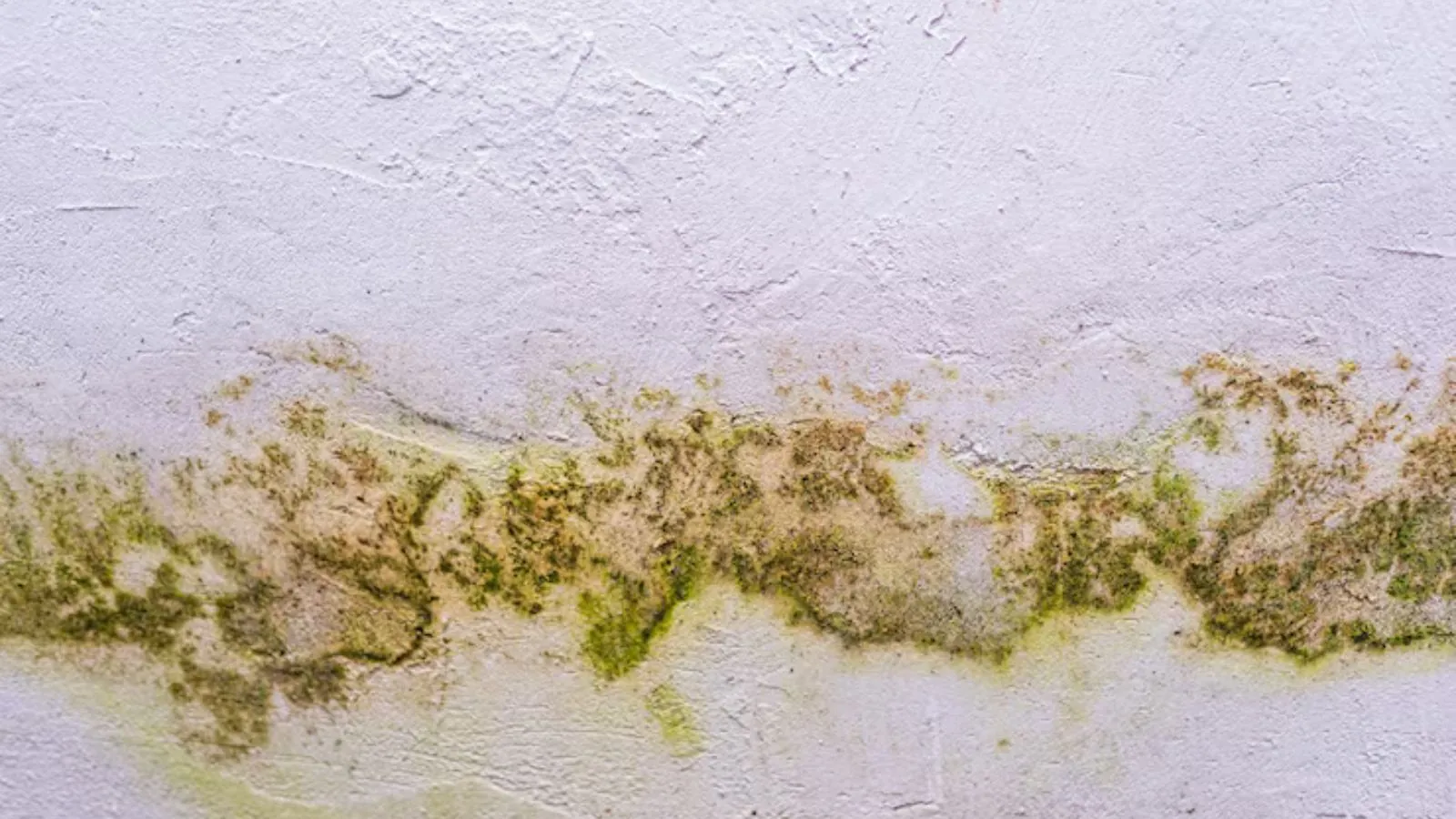
Basement mold is a moisture problem that happens to be visible. Scrub the spots without changing the conditions and they return in a few weeks. To eliminate mold in a basement, you have to work on the whole room, not only the patch on the wall.
This guide covers the room-level plan: where the moisture comes from, how to bring humidity down, what to remove and when the job is too big for a homeowner.
Why Basements Grow Mold
Mold needs moisture, a food source and time. Basements supply all three. Concrete walls and floors are cool, so humid summer air condenses on them. Cardboard, wood, drywall paper and dust are food. And few people look behind the storage shelves often.
Missouri health officials put the principle in six words: control the moisture, control the mold. Everything else in this guide follows from that.
Step 1: Find Where the Moisture Comes From
| Clue | Likely source | Typical fix |
|---|---|---|
| Damp walls and floor in summer, worse on humid days | Condensation | Dehumidifier, air circulation, insulate cold pipes |
| Wet patch after rain, often along one wall | Seepage through the foundation | Gutters, grading, foundation contractor |
| Damp area near plumbing or the water heater | Slow leak | Plumber |
| Water around the sump pit or floor drain | Pump or drain problem | Plumber |
| Mold only behind stored boxes on an outside wall | No airflow against a cool wall | Move storage off the wall |
A simple test helps. Tape a square of plastic sheet to the wall for two days. Moisture on the room side means condensation. Moisture behind it means water is coming through the wall.
Step 2: Bring the Humidity Down
Buy an inexpensive hygrometer and aim for indoor relative humidity below about 50 percent. A basement dehumidifier with a drain hose is the usual tool. Empty-the-bucket models tend to be forgotten.
Keep basement windows closed in humid weather. It feels wrong, but warm outdoor air brings moisture in and deposits it on cool concrete. Make sure the dryer vents outside and that bathroom fans do the same.
Step 3: Remove What Is Already Moldy
Porous materials that have mold growth are removed, not cleaned. That includes cardboard, carpet, pad, ceiling tile, insulation and drywall. Bag them in the basement and carry them out without dragging them through the house.
Hard surfaces such as concrete, metal and solid wood can be scrubbed with detergent and water and then dried. Wear gloves, eye protection and an N95 respirator. Never mix bleach with ammonia or other cleaners.
For a small area, careful homeowners can do this themselves. Federal guidance commonly uses about 10 square feet, roughly a three foot by three foot patch, as the point above which professional help is worth considering.
Step 4: Dry Everything Fully
After cleaning, run the dehumidifier and a fan until surfaces are dry to the touch and the hygrometer holds steady. Missouri health guidance says wet items should be dried in the first 24 to 48 hours, and that porous items which dry slowly and show mold or water damage should be discarded.
If the basement recently took in water, drying the structure properly matters more than any cleaning product. Professional structural drying uses measurement to confirm the framing and slab are actually dry.
Step 5: Keep It From Coming Back
- Keep storage on shelves, a few inches off the floor and away from outside walls.
- Use plastic bins in place of cardboard.
- Extend downspouts several feet from the foundation and keep gutters clear.
- Check the hygrometer monthly in summer.
- Look behind stored items twice a year.
When to Call a Professional
Get help when the affected area is large, when mold is inside finished walls or under carpet, when it follows sewage or flooding, or when it returns after you have cleaned it. Professional mold remediation follows the ANSI/IICRC S520 standard, using containment and HEPA filtration so spores are not spread upstairs.
Health concerns belong with a physician. A restoration crew can remove mold and fix dampness but cannot diagnose symptoms.
Local Note for Grandview, MO
Grandview basements and moisture
Grandview lies along the Little Blue River, which flooded parts of the city twice in the summer of 2017. Any basement that took floodwater then, or in a later storm, and was closed up without full drying is a candidate for hidden mold behind finished walls.
The Missouri Department of Health and Senior Services states that there are no Missouri or federal laws setting mold limits. That means there is no official pass mark to test against. The practical goal is simply no visible growth and a dry basement. Source types: state health department website and local news reporting.
Nearby Towns
Grandview Water Damage Pros handles basement moisture and mold for Grandview homeowners. For Lee's Summit and Pleasant Hill addresses, ask the dispatcher about availability.
Basement Mold FAQs
Prefer to talk it through with a person? Call (833) 521-1033 at any hour.
My Grandview basement got wet in a past flood and smells musty years later. Is that mold?
It may be. A persistent musty smell in a basement that once flooded suggests something stayed damp, often behind paneling or under carpet. Have the walls checked with a moisture meter before opening anything.
Does bleach eliminate basement mold?
Bleach can lighten stains on hard surfaces, but it does not fix the moisture and it does not penetrate porous materials. Detergent, removal of affected porous items and thorough drying do more.
What humidity should a basement be?
Aim for below about 50 percent relative humidity. Above 60 percent for long periods, mold growth becomes much more likely.
Is basement mold dangerous?
Reactions vary from person to person, and that is a medical question. Speak with a physician about health concerns. From a building standpoint, any visible mold should be removed and the moisture corrected.
Mold keeps coming back? Have the moisture source measured and fixed.
☎ Call (833) 521-1033