

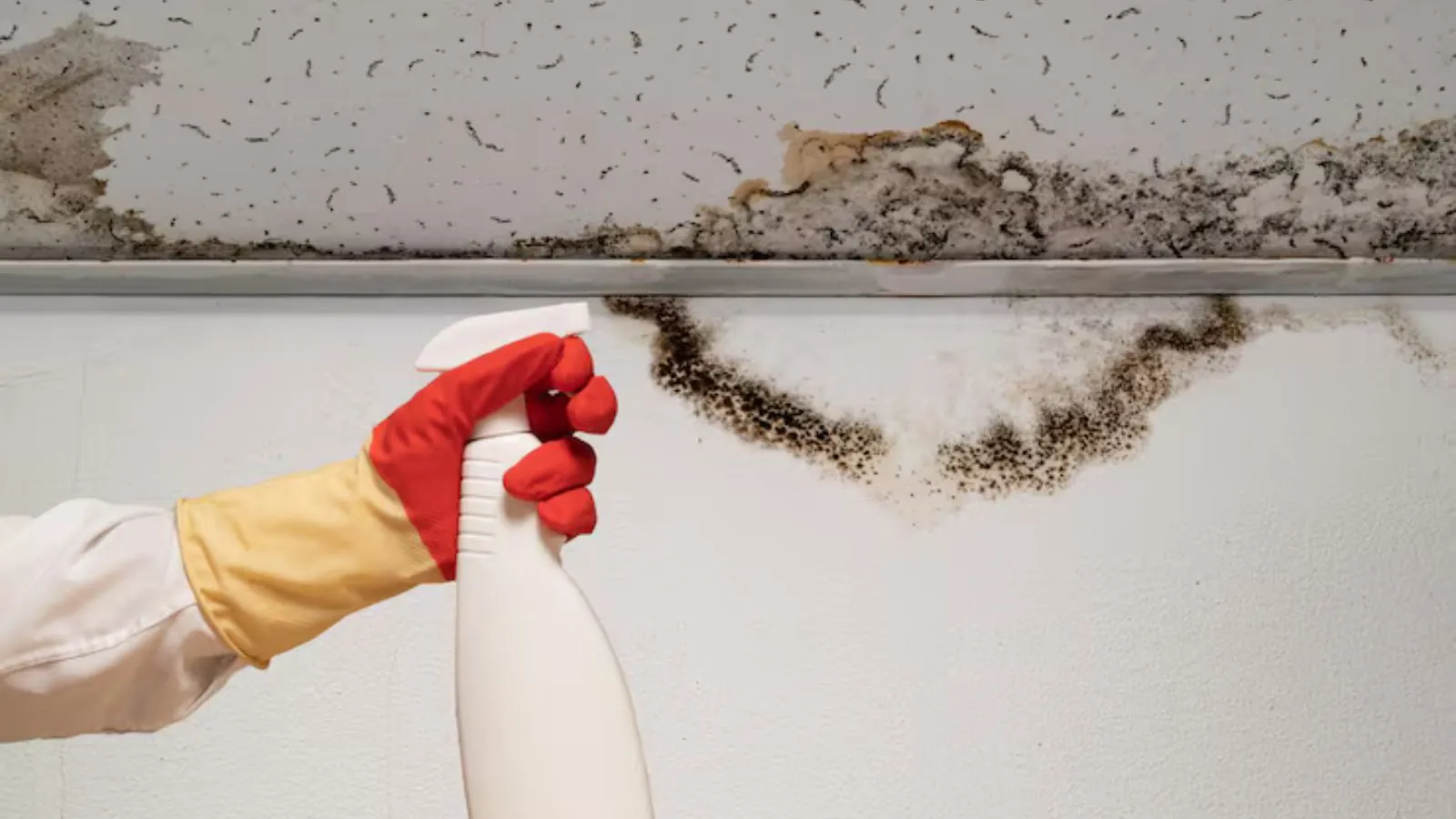
Mold is one of the most limited areas of homeowners coverage. Many policies exclude it outright, cap what they will pay, or cover it only when it results from a water loss that was itself covered. Knowing that pattern helps you ask the right questions.
This is general information. Your policy wording decides, and only your insurer can interpret it. Check your policy or ask your insurer or agent.
The Usual Rule: Follow the Water
Insurers generally look past the mold to its cause. If mold grew because a pipe burst last week and the loss was reported and dried promptly, the mold may be treated as part of that covered claim, subject to any limit.
If mold grew because of humidity, long-term seepage, a leak that went unrepaired or poor ventilation, it is usually treated as a maintenance matter and declined.
How Common Situations Tend to Play Out
| Situation | Typical treatment | Why |
|---|---|---|
| Mold after a sudden pipe burst, reported and dried promptly | Often covered up to the mold limit | Result of a covered sudden loss |
| Mold found behind a wall from a slow drip | Often excluded | Gradual leak, not sudden |
| Mold from high humidity or condensation | Usually excluded | Maintenance and ventilation |
| Mold after outside flooding | Excluded under homeowners, depends on flood policy terms | Flood is a separate coverage |
| Mold after a covered loss where drying was delayed | May be disputed | Duty to prevent further damage |
General patterns only. Read your own policy.
Mold Limits and Endorsements
Where mold is covered, there is often a sublimit, a fixed maximum for mold cleanup that is much lower than the dwelling limit. Some insurers sell an endorsement that raises it.
Look in your policy for the words fungi, wet rot, dry rot and bacteria. That section states any exclusion or cap. If you cannot find it, ask your agent to point to the page.
Why Fast Drying Protects Coverage
Policies require the owner to take reasonable steps to prevent further damage after a loss. If a covered leak is left wet and mold follows, an insurer may argue the mold came from the delay.
Missouri health officials advise drying wet items in the first 24 to 48 hours. Starting professional drying in that window, and having daily moisture readings to prove it, is the strongest position to be in. See structural drying and dehumidification for how drying is measured.
What to Document
For a mold-related claim
- The original water event: date, cause and photos
- When you reported it and to whom
- What was done to dry the area and when it started
- Moisture readings during and at the end of drying
- Photos of the mold before removal, with something for scale
- The remediation scope of work and invoice
- Any independent assessment or clearance report
If the Mold Is Not Covered
The growth still has to be dealt with, because it continues while moisture is present. Fix the water source first. Small areas on hard surfaces can be cleaned by a careful homeowner. Larger areas, or growth inside walls and floors, need professional mold remediation.
Ask for a written scope that separates the mold work from any water damage repair. That makes it easier to see which parts an insurer might pay for.
Renters and Landlords
A renter's policy covers the tenant's belongings, not the building. The building is the owner's responsibility. Tenants who find mold should tell the landlord in writing and keep a copy with photos.
Landlords, for their part, should check what their own property policy says about mold and whether a tenant-reported leak was repaired promptly. A dated repair record is useful evidence that the water event was sudden and was handled without delay.
Local Note for Grandview, MO
Missouri guidance that bears on mold claims
The Missouri Department of Commerce and Insurance explains in its homeowners guidance that wear and tear and lack of maintenance are not covered, and that coverage applies to damage from a covered peril. Mold from a long-neglected leak falls on the wrong side of that line.
The department also notes that standard policies generally do not cover flood. In Grandview, where the Little Blue River flooded homes in July and August of 2017, mold that follows river flooding would be a flood policy question, not a homeowners one. Source types: state insurance department website and local news reporting.
Service Area
Mold remediation is offered in Grandview. Callers from Lee's Summit and Pleasant Hill can ask the dispatcher about availability.
Mold and Insurance FAQs
Prefer to talk it through with a person? Call (833) 521-1033 at any hour.
My Grandview basement flooded from the river and now has mold. Will homeowners insurance pay?
Generally no. Flood is excluded from standard homeowners policies, and mold that results from flooding follows the same exclusion. If you carry flood insurance, ask that insurer how mold is handled.
Is mold testing covered by insurance?
Sometimes, when it is part of a covered claim and the insurer agrees it is needed. Ask before you order testing.
I just found mold from a leak I did not know about. Should I report it?
Talk to your agent about your options. Insurers look at whether the leak was hidden and sudden or long-running. Have your photos and any plumber's findings ready.
Can a restoration company tell me if I am covered?
No. A crew can document the damage and explain its scope of work. Coverage is decided by your insurer under your policy.
Mold after a leak? Have it documented and removed properly. Call the 24/7 line.
☎ Call (833) 521-1033